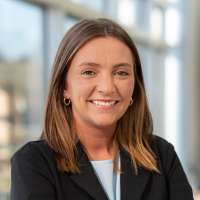
When Will Isham talks about the Emergency Medical Technician - Paramedic program at Northcentral Technical College (NTC), he doesn’t start with data or metrics; his focus is on people – students balancing jobs and families and rural communities wondering who will answer the call in an emergency.
That mindset led him to make innovative changes to the program. It operates in a hybrid model, allowing flexibility for students to learn and still maintain a busy life.
“Our program is expanding, and I think it is largely due to our innovation behind our hybrid program,” Isham said. “By doing that, we are seeing expansions into the far reaches of our district.”
Rather than requiring students to attend in-person classes multiple days a week, readings and lectures are all provided as online assignments that students can complete on their own schedules. In-person time is reserved for hands-on labs and skills development. If there is a preceptor at their site, students can get their skills cleared through them. This is helpful for students who live far away, as they are not required to drive all the way to campus to perform the skills.
For students who want that traditional in-person experience or do not have preceptors, the program offers open labs two days a week. These are open to any students in the program, and the topic for the day is based largely on the needs of the students there at any given time.
“When we first started the hybrid model, students felt disconnected because they weren’t with the same group of students all the time like in a traditional class,” Isham said. "These open labs are really the highlight of the program because it brought back connection for students to instructors and other students.”
However, because the open labs are not required, there are no repercussions if a student misses a day, and they don’t feel added stress if they are sick or childcare falls through. Additionally, all of the open labs are livestreamed, so even students who live far away are able to join in and participate in the conversation remotely. After the lab is over, the recording is posted, so any students who missed it are able to go back and watch it if desired.
“It took a couple years of trial and error to get it right,” Isham said. “But now it’s really about individual learning and meeting students where they are.”
He said he thinks word is spreading on the value of the supplemental open labs because he is beginning to see more and more students showing up. As the EMS program director, he is working to expand this model into the Emergency Medical Technician (EMT) and Advanced EMT programs as well.
This innovation and Isham’s student-focused mindset is one of the reasons he was named the 2025 Wisconsin EMS Association Educator of the Year. The honor reflects years of innovation, persistence and a personal mission to make emergency medical education more accessible.
“I didn’t even know I’d been nominated,” Isham said. “I’m not someone who likes to be on the front page, but I am very proud to have earned this honor.”
The focus on access is intentional. Across the state, emergency medical services are facing workforce shortages, particularly in rural areas where volunteer numbers are declining and departments are struggling to stay staffed.
“Our goal was to reach those rural communities and find a way to bring education to them instead of making them come to us,” Isham said. “That’s where the need is.”
His approach is producing results. More departments are sponsoring students and asking NTC to bring education to their communities. The most recent cohort had 18 students complete the program, one of the strongest class numbers in recent years.
Isham’s desire to make the program more accessible and flexible is rooted in his own experiences. He earned his EMT license in his late 30s and his paramedic license in his early 40s, which is later than most in the career field. He was working full time and raising a young child while also juggling school.
“My schooling as a nontraditional student was really tough,” he said. “The program wasn’t designed for someone in my position. I knew there must be more people out there like me who wanted to do this work but couldn’t fit into the traditional model.”
His hope is that other emergency medical services programs across the state can imitate the hybrid concept and make more programs more accessible.
Isham’s passion for emergency medical services is palpable, and he said he loves to watch as his students discover their own passion for the field.
“My favorite part is seeing their passion come to life,” he said. “Getting to the end of the program, earning their license and starting a career they can grow over the next 20 years – that's really special.”
His greatest goal is that the work he’s doing is helping to ensure communities know that when they call for help, someone will be there.
“That’s what this is all about,” he said. “Knowing that when someone needs help in their worst moment, there’s a trained professional coming to answer that call.”